
Sanitized recreation Job Cost Ready
Construction and trades
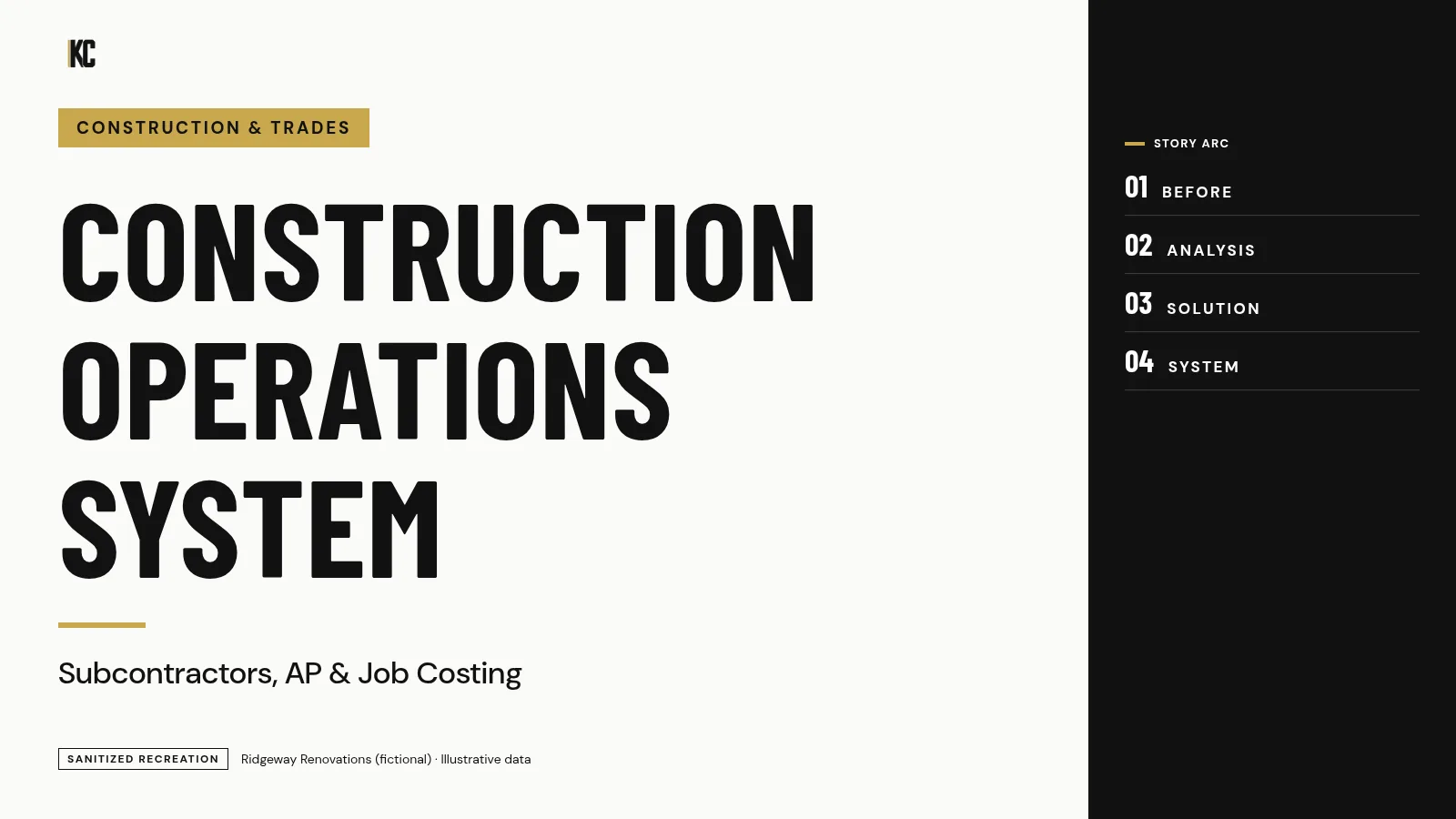
Construction Operations System
Most small contractors do not have a construction problem. They have a back-office problem. This recreation shows the back office for a growing remodeler: subcontractor and vendor onboarding with W-9s, signed agreements, insurance certificates and workers’ comp paperwork where it applies, invoices coded to a job before approval, crew time tracked by job, and job costing against budget while the job is still running.
Ridgeway Renovations (fictional) · Illustrative data. A fictional company and fictional data, built to show the same type of work Kelly has really done.
The scenario
- A residential remodeler with 16 employees, 20 to 30 active subs and suppliers, and 10 to 14 jobs running at any time (illustrative).
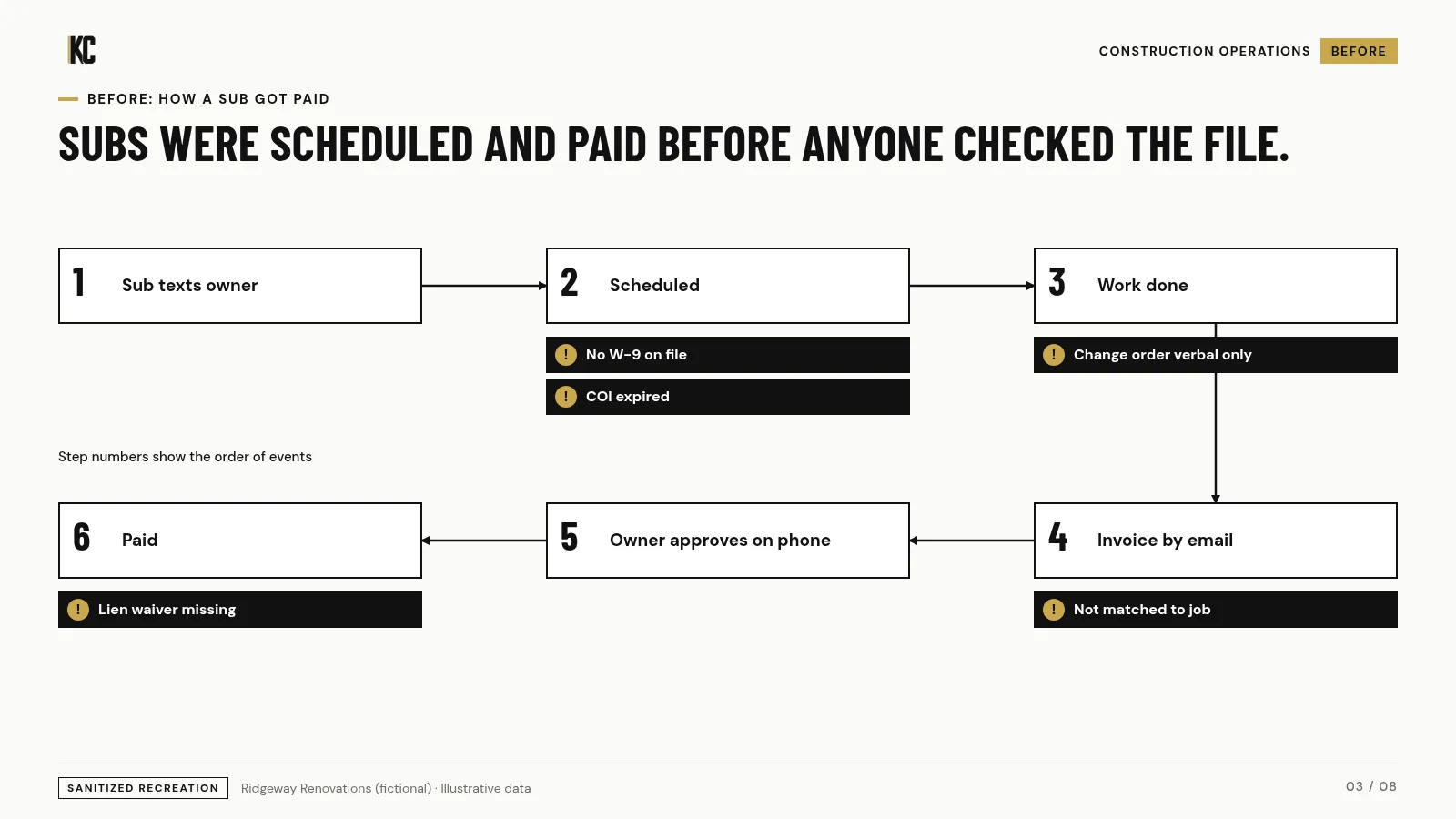
- Sub paperwork lives in email attachments, a desk drawer and the office manager’s head.
- New vendors get set up in QuickBooks Online whenever someone remembers, sometimes without a W-9.
- Change orders are agreed verbally on site and show up later as invoice disputes.
- Crew hours are tracked, but not by job, so labor never makes it into job costing.
- The owner knows the business is profitable overall but cannot tell which job types make money.
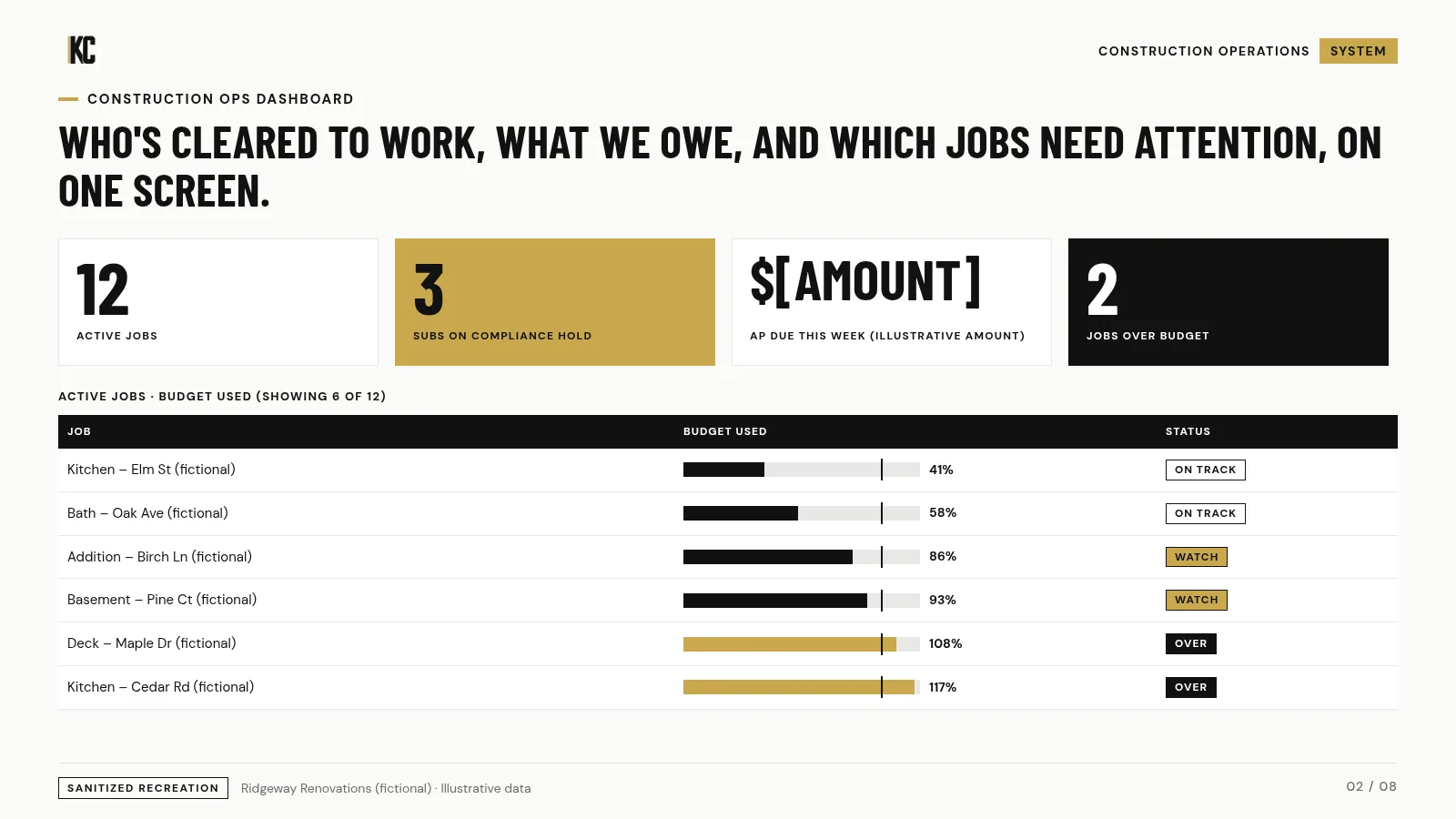
The ask: “I want to know who’s cleared to work, what we owe, and whether a job is making money, without calling three people.”
The approach
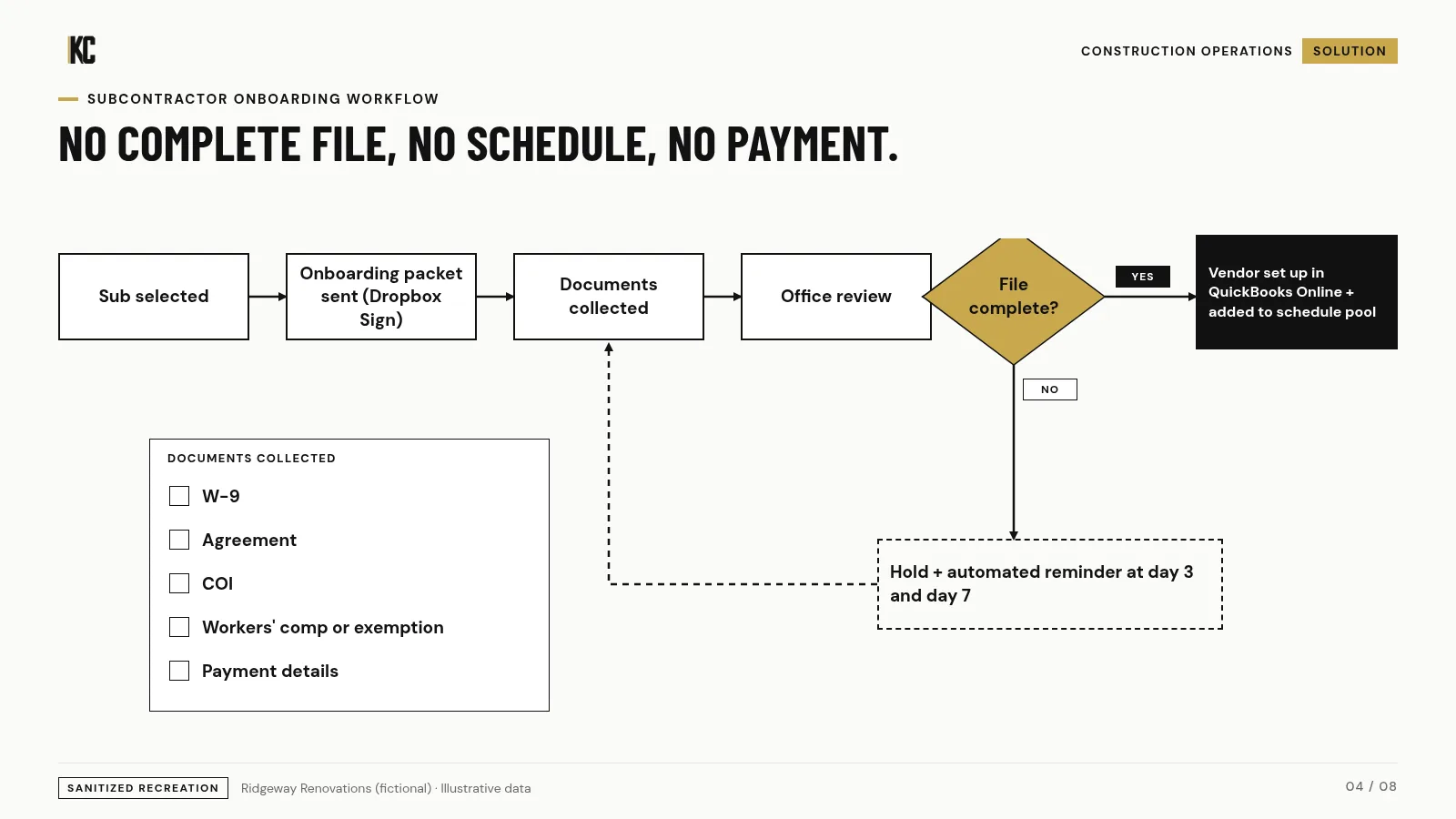
- Gate the risk at the front door: no W-9, signed agreement, current certificate of insurance and workers’ comp paperwork (or exemption, where that applies), no schedule and no payment.
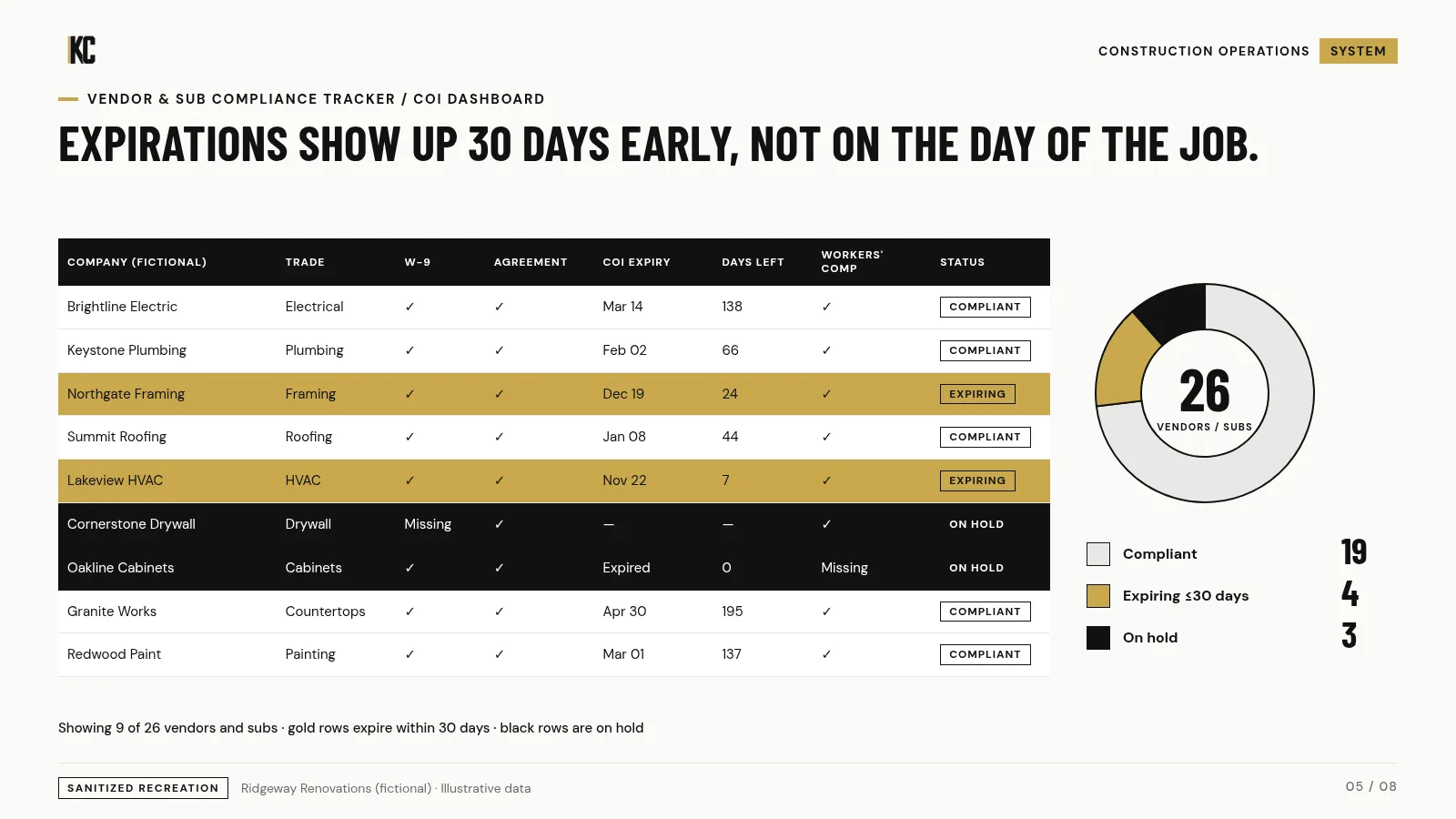
- Make expirations impossible to miss with a tracker that shows days to expiry and a hold flag.
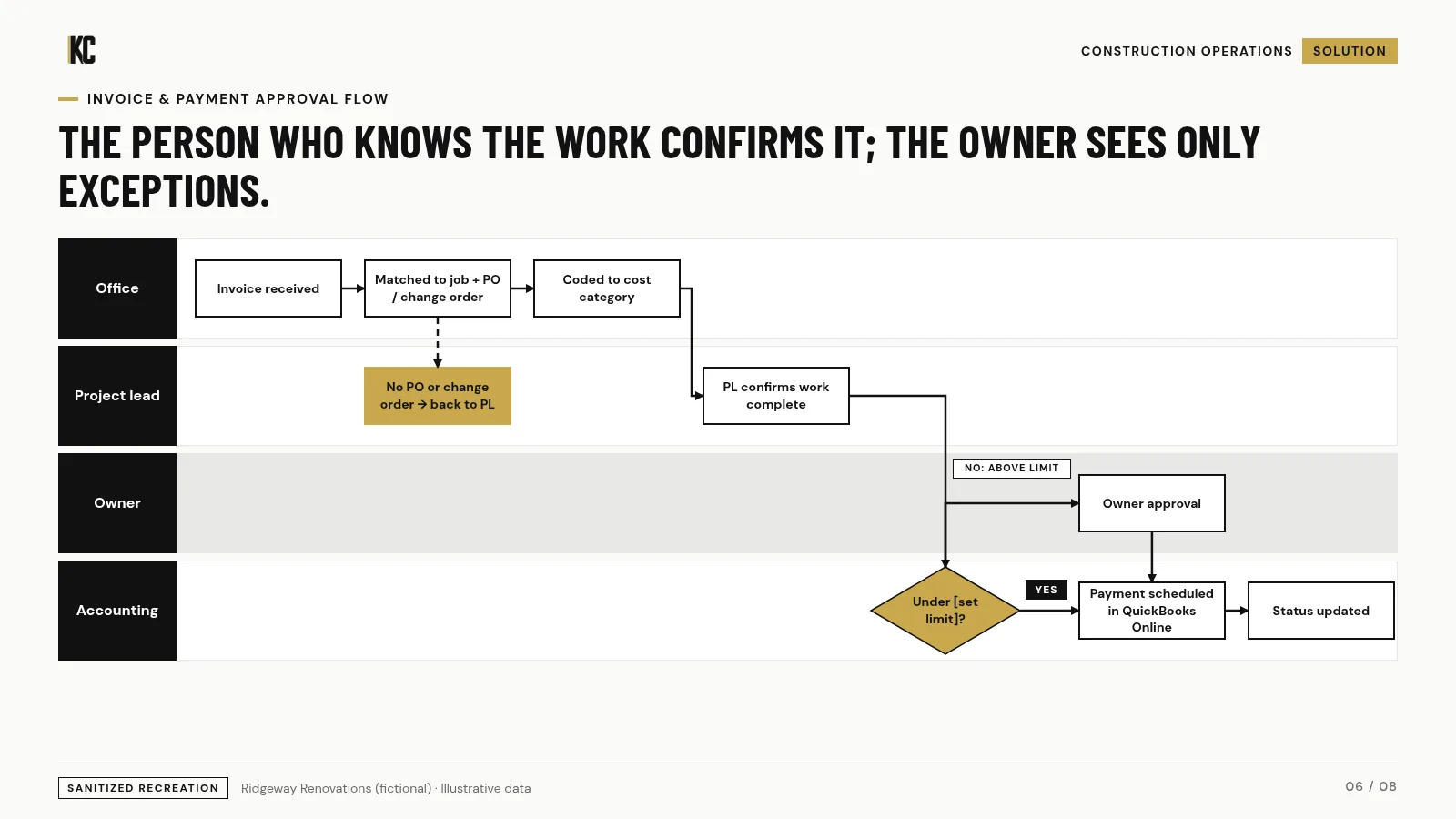
- Code every dollar to a job and cost category before approval, so job costing becomes a byproduct of AP instead of a month-end project.
- Tie crew time to the job, approved before payroll runs, so labor shows up in job costing.
- Treat change orders as a document, not a conversation.
- Design the workflow first, then set it up in the tools already in place.
Deliverables
- Subcontractor onboarding workflow and required-documents checklist
- Vendor onboarding workflow and vendor master list
- COI and compliance tracker with expiration alerts and hold rules
- Invoice processing SOP: receive, match to job, code, approve, schedule payment
- Crew time-to-payroll handoff with time by job and cost code
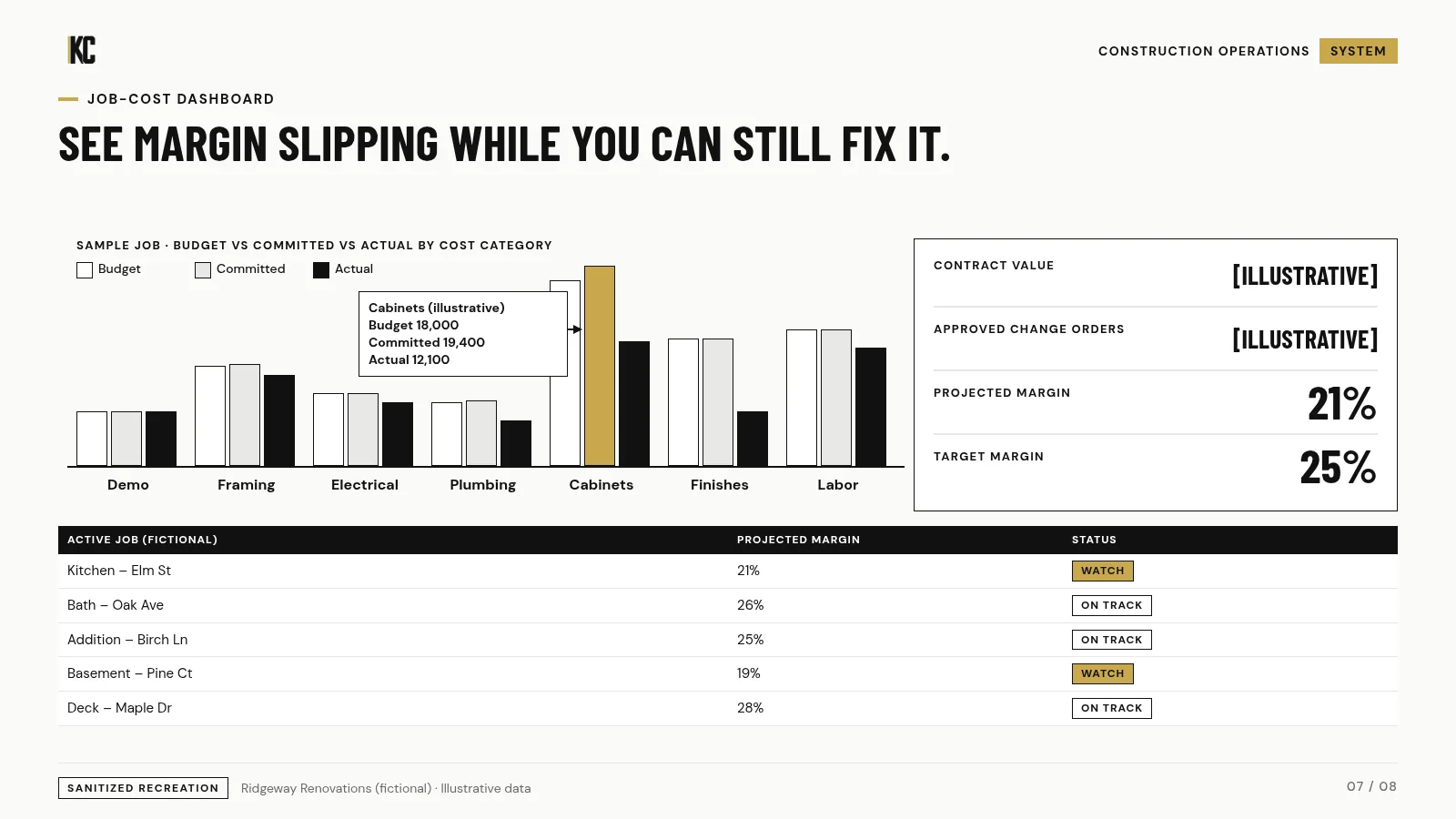
- Job-cost tracker: budget vs committed vs actual by cost category
- Construction operations dashboard and weekly owner report
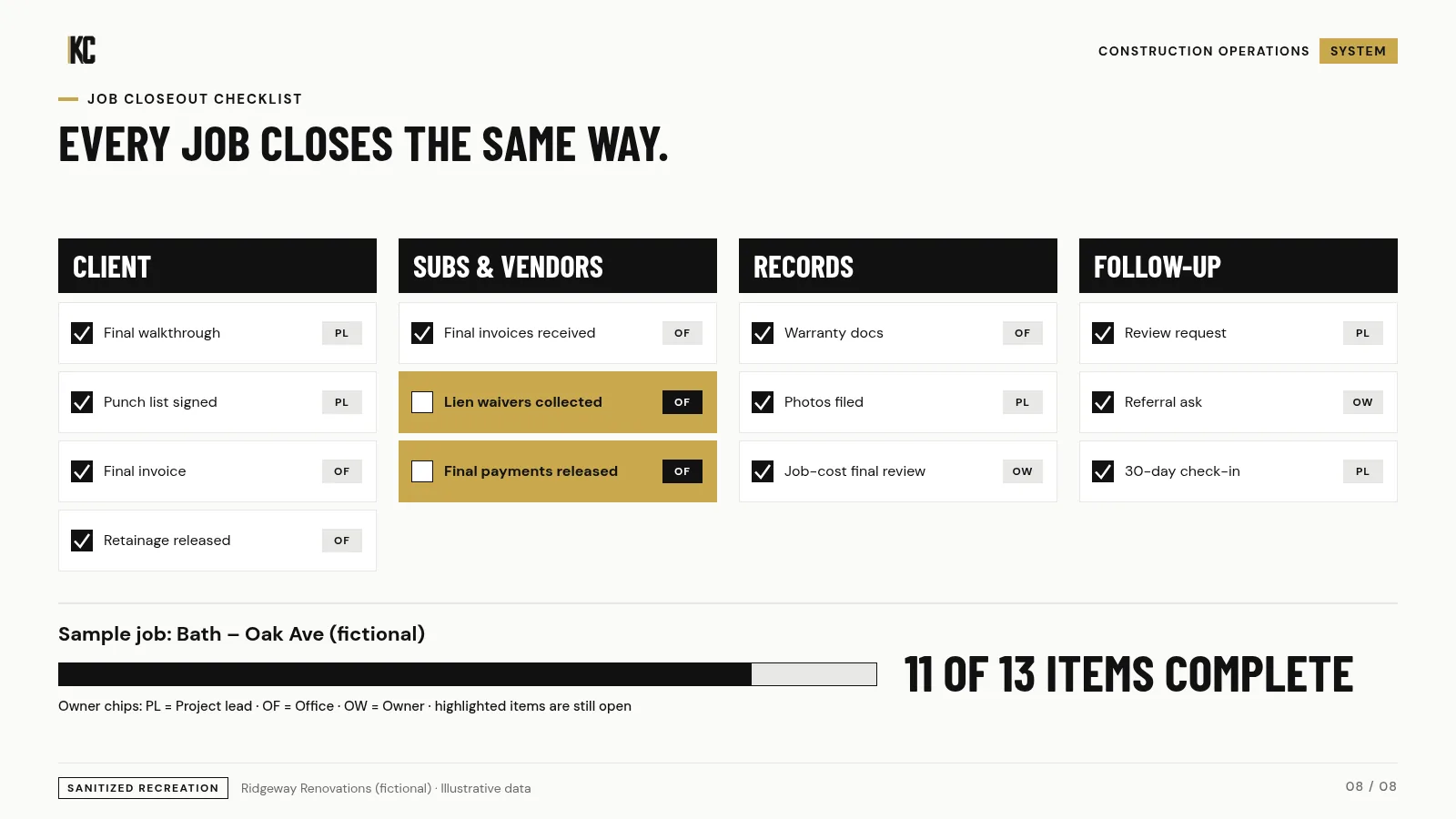
- Job closeout checklist, SOPs and a team walkthrough
What is real here
Kelly ran back-office operations for an owner-led construction and remodeling business: subcontractor onboarding, W-9s, agreements, insurance certificate collection, workers’ comp requirements where they applied, vendor setup, invoicing, AP and AR, payroll, budgets and job costing. Ridgeway Renovations and every number shown are fictional.
Service path: Job Cost Ready
Related: Job costing and profitability
The storyboard
Ridgeway Renovations (fictional) · Illustrative data. Images are 16:9 slides from the sample project.
More projects
CRM and Sales-to-Operations Handoff
From “deal won” to a job production can start.
KPI Dashboard and Management Reporting
One page leadership trusts on Monday morning.
Bring me the problem
Have a problem like this one?
Book the free 15-Minute Systems Fit Call. I learn what you need and how you want to solve it, tell you whether and how I can help, and if it is a fit you get a fixed-scope proposal.